

Everglades Water Quality 101
Updated: 9 hours ago
What “clean water” really means, why phosphorus matters,
and how water is treated before it enters the Everglades.

By Paul Julian, PhD | Biogeochemist and Restoration Planning Lead
A glass of water may look perfectly clear, but that does not necessarily mean it is clean enough for the Everglades. Nutrient pollution is often invisible, and even small amounts of phosphorus can gradually change the plants, wildlife, and natural balance of this unique and sensitive ecosystem.
That is why Everglades restoration is about more than moving water south. The water must also be clean enough to protect the ecosystems it is intended to restore. So, what does “clean water” mean in the Everglades, where does nutrient pollution come from, and how is it removed? Here are the essential facts about Everglades water quality.
1. What does “water quality” mean?
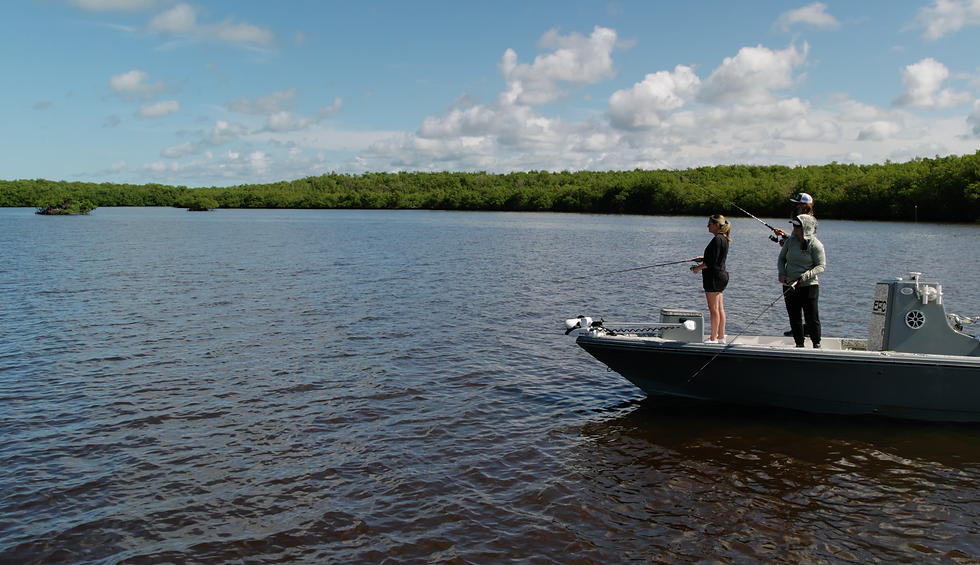
Clean water is not defined by appearance alone. Water can look clear while still containing nutrients, pollutants, or other substances that affect people and ecosystems. Water quality is a broad term that describes the physical, chemical, and biological properties of water. These properties include temperature, clarity, pH, dissolved oxygen, salinity, nutrient and ion concentrations, and aquatic organisms.
What counts as acceptable or “good” water quality depends on the water’s intended use. Good water quality means different things for drinking, recreation, agriculture, or supporting an ecosystem. A swimming pool, for example, may have clear water that is appropriate for swimming, but that does not make it suitable for drinking or for sustaining a sensitive wetland. Therefore, a water source that is suitable for one purpose may not be suitable for another. Water quality standards are developed to connect the condition of the water with its intended use.
In the Everglades, there is a legal standard for phosphorus, the nutrient most harmful to the Everglades, and that standard must be met. That brings us to an important question: what does “clean enough” mean for water flowing through a naturally nutrient-poor wetland?
2. Why does the Everglades need such clean water?
The Everglades is naturally a very low-nutrient ecosystem. Its sawgrass marsh, periphyton communities, wildlife, and food webs evolved under conditions where nutrients, particularly phosphorus, were extremely low. These natural communities are adapted to low nutrient concentrations and can be extremely sensitive to even small increases. What might seem like a small nutrient increase elsewhere can have significant consequences in the Everglades.
This is why appearance alone cannot tell us whether water is clean enough for the ecosystem. Water may look perfectly clear but still carry enough phosphorus to gradually change plant and periphyton communities. Those changes can ripple through the food web and alter how the wetland functions.

Protecting the Everglades means maintaining the low-nutrient conditions that allow its characteristic plants, animals, habitats, and food webs to persist. From the Everglades perspective, clean water is water that supports those communities and the ecological processes on which they depend.
3. What is nutrient pollution?
Nutrients such as phosphorus and nitrogen occur naturally and are essential to plant and animal life. Nutrients become pollution when too many enter a water body or ecosystem and disrupt its natural processes and balance.
A useful comparison is fertilizer. The right amount helps plants grow, but too much fertilizer, or fertilizer added where it does not belong, can change which plants thrive. Phosphorus is therefore not inherently toxic or “bad.” It is a naturally occurring element that all living things need. The problem is the amount and where it ends up. In the freshwater Everglades, plants and animals are adapted to extremely low phosphorus conditions, so even relatively small additions can favor nutrient-loving species and begin to alter the ecosystem.
4. Why is phosphorus the primary concern in the freshwater Everglades?
In most gardens, adding phosphorus can help plants grow. In the freshwater Everglades, however, even a little extra can change the ecosystem. The freshwater Everglades developed under naturally low-phosphorus conditions. Because phosphorus is naturally scarce, it often limits plant growth and helps shape the ecosystem’s characteristic plant communities and food webs. Even relatively small increases can disturb that balance.
Because the Everglades is so sensitive to phosphorus, concentrations are measured in parts per billion, or ppb. To put ppb into perspective, and to visualize how small that is, one part per billion is roughly half a teaspoon in an Olympic-size swimming pool. The water-quality criterion for the Everglades Protection Area is expressed as a long-term geometric mean of 10 ppb, illustrating how low phosphorus must remain to protect the ecosystem.
When evaluating phosphorus, scientists consider both concentration and load. Concentration is how much phosphorus is present in a given volume of water, while load is the total amount of phosphorus carried by the water over a given period of time. Think of concentration as the amount of sugar in one glass of iced tea and load as the total amount of sugar in an entire pitcher. Every glass could have the same sweetness, but a larger pitcher would contain more sugar overall. Similarly, moving a larger volume of water south can deliver more phosphorus even if the concentration does not change.
That is why Everglades restoration is not simply about sending more water south. It is about delivering the right amount of water while keeping its phosphorus concentration and total load low enough to protect the natural balance of the marsh.
5. Where does excess phosphorus come from?
Excess phosphorus reaches the Greater Everglades from multiple sources. Fertilizers support agricultural production, but rainfall, runoff, and drainage can carry phosphorus away from fields and other parts of the landscape. Animal feed, manure, urban runoff, and phosphorus stored in soils from historical land uses may also contribute. The relative importance of these sources varies across the watershed.

Water connects these sources to the broader Everglades. Runoff from areas north of Lake Okeechobee can carry phosphorus into the lake. Water discharged from the lake and drainage from the Everglades Agricultural Area can then move through canals and other parts of South Florida’s water-management system. The Everglades Agricultural Area is dominated by sugarcane production, with smaller areas used for vegetables, rice, sod and other crops. As a result, much of the agricultural drainage moving through the EAA comes from this sugarcane-dominated landscape. These canals are important pathways through which water, and the phosphorus it carries, can travel across the managed landscape.
Agriculture is the primary contributor to phosphorus loads reaching the Everglades, but it is not the only source. Urban and suburban runoff can also carry nutrients from developed areas. Soil conditions, historical land uses, rainfall, current land-management practices, and the operation of the regional water-management system can all influence where phosphorus originates and how it moves.
Like other forms of nutrient pollution, phosphorus is often invisible. Water can look clear while still carrying enough phosphorus to affect the Everglades. Monitoring has found that rainfall-driven areas farther from canal-water influence generally have lower phosphorus levels, while some canal-influenced areas show elevated phosphorus in water and soils, and extensive cattail encroachment.
6. What happens when too much phosphorus reaches the Everglades?
Excess phosphorus acts like fertilizer in the marsh. It gives plants that grow well under nutrient-rich conditions a competitive advantage over native communities adapted to the Everglades’ naturally low-phosphorus environment. One of the most visible effects of high nutrient conditions is the expansion of dense cattail stands into areas historically characterized by sawgrass, sloughs, periphyton, and other native Everglades communities. Continued phosphorus loading can also enrich the soil, reinforcing the shift toward a more nutrient-rich ecosystem.

That transformation reaches far beyond one plant. When vegetation changes, so do the shelter and feeding areas available to wildlife. Periphyton and other food sources can change, phosphorus can accumulate in the soil, and effects can move through the broader food web.
Once those changes take hold, simply removing the cattails does not solve the underlying problem. Phosphorus stored in the soil can continue to favor nutrient-rich conditions, making ecological recovery difficult and costly. Cleaning the water protects the living architecture of the Everglades, from its soils and periphyton to its plants, wildlife, and food webs.
7. Why can’t we simply send more water south?
Sending more freshwater south is essential to restoring the Everglades. More water can rehydrate wetlands, improve freshwater flow, and help restore areas damaged by decades of drainage. But more water is not automatically beneficial if it carries too much phosphorus or other pollutants.
Reservoirs are important tools to capture and store water, but storage alone does not remove all excess nutrients. Water carrying excess phosphorus must be treated before it is sent into the Everglades. If that water moves south without sufficient treatment, a larger volume can deliver a larger nutrient load to an ecosystem adapted to very little phosphorus. Water quantity and water quality therefore cannot be addressed separately.
The goal of Everglades restoration is not simply “more water.” It is to deliver the right quantity and quality of water, at the right time and to the right places. That integrated approach is central to the Comprehensive Everglades Restoration Plan.
8. How is phosphorus reduced before water enters the Everglades?
Protecting the Everglades from excess phosphorus requires multiple lines of defense. The first is reducing the amount of phosphorus entering the water. The second is treating that water before it reaches the marsh.

Reducing pollution at its source includes the use of Agricultural Best Management Practices, or BMPs, designed to limit the amount of phosphorus leaving farms. These practices include carefully managing fertilizer application, controlling water levels and drainage, monitoring soil conditions, and reducing the movement of phosphorus-rich sediments. These practices lower the amount of phosphorus that must be removed later, but they do not replace downstream treatment.
The next line of defense is the use of Stormwater Treatment Areas, or STAs. These large, constructed wetlands reduce phosphorus concentrations before water enters the Everglades. Water moves slowly through treatment cells filled with aquatic vegetation, where natural physical, chemical, and biological processes remove and retain phosphorus
Scientists monitor the water as it enters and leaves the treatment areas to evaluate how effectively phosphorus is being reduced. No single measure solves the phosphorus problem by itself. Protecting the Everglades requires reducing pollution at its source, treating the water that remains, and monitoring the result.
9. What are Stormwater Treatment Areas, and how do they work?
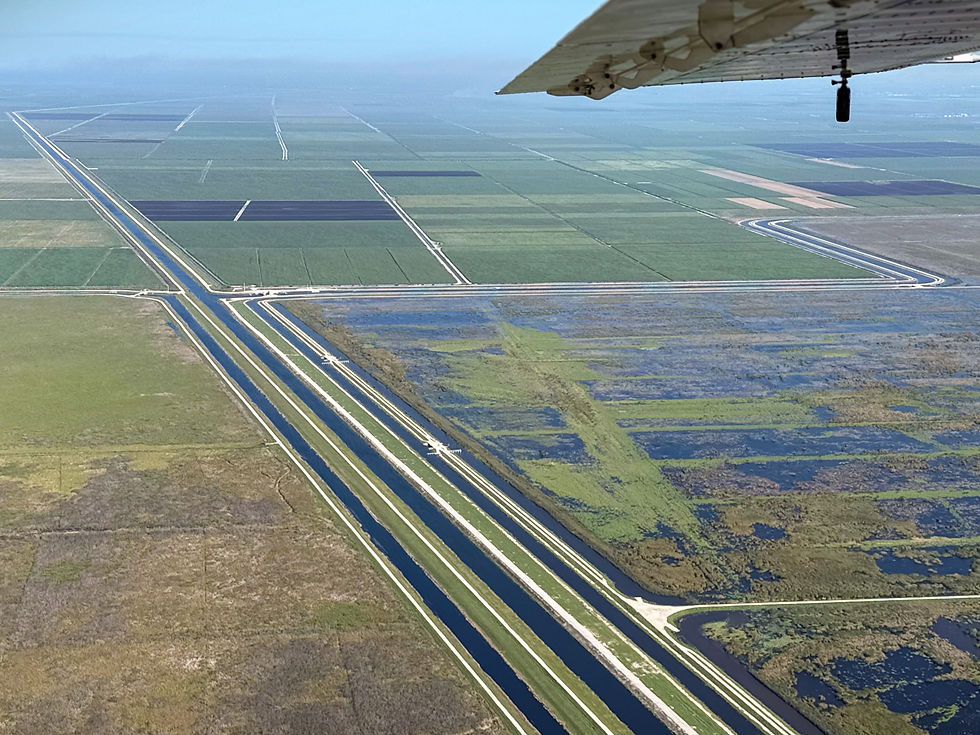
Stormwater Treatment Areas, or STAs, are large, constructed wetlands designed to reduce phosphorus in water before it enters the Everglades. Unlike conventional mechanical or chemical treatment plants, STAs rely on vegetation, microorganisms, settling, and nutrient storage in plant material and soils.
The treatment journey generally works like this:
Water enters the STA.
Water-control structures distribute it across large treatment cells, which may be arranged into connected flow-ways.
Emergent and submerged aquatic vegetation slows the water and provides surfaces for periphyton and microorganisms.
Plants and microorganisms take up phosphorus from water.
As the water slows, phosphorus-containing particles settle.
Over time, phosphorus accumulates in plant material and wetland soils.
Water leaving the treatment area has a lower phosphorus concentration and may continue toward the Everglades.
This natural approach needs enough land and time to work. Water must move through the vegetated cells at a rate that allows these biological, chemical, and physical processes to reduce phosphorus. Treatment capacity is therefore not unlimited. Performance can be affected by the volume and rate of incoming water, its phosphorus concentration, water depth, weather, vegetation conditions, and the amount of treatment area available can all affect performance
STAs are living treatment systems rather than passive holding ponds. They must be monitored, operated, and maintained so that wetland vegetation and water flow continue to support phosphorus removal.
10. Why do STAs have to be continuously operated and maintained?
You do not simply build a Stormwater Treatment Area and walk away. An STA is a living wetland system whose vegetation, soils, water levels, and treatment conditions change over time. Continued operation, maintenance, scientific monitoring, and adaptive management are essential to keep it functioning effectively.
Water managers regulate how much water enters, when it enters, how quickly it moves, how it is distributed across treatment cells, and the depths maintained within the system. Vegetation must be monitored and managed, and the pumps, gates, levees, and canals that move and contain water must be maintained.
Conditions are continually changing. Heavy rainfall may produce large inflows, while drought can lower water levels and stress vegetation. Incoming water quality and the condition of vegetation can also vary. Managers may therefore adjust water delivery and distribution in response to rainfall, drought, water quality, vegetation conditions, and maintenance needs.
Flow Equalization Basins, or FEBs, provide another management tool. FEBs temporarily store stormwater and moderate peak flows, allowing water to be delivered to an STA at more manageable rates.
The STA provides the living treatment system, while science, infrastructure, and adaptive management keep it functioning as conditions change.
11. How do scientists determine whether the water is clean enough?
Scientists measure the concentration of total phosphorus entering and leaving the STAs as well as downstream in the Everglades. Water is sampled before it enters an STA, as it moves through the treatment cells, as it leaves the STA, and within the Everglades marsh. Scientists use these samples to track phosphorus concentrations and treatment performance. They also examine ecological responses in vegetation, periphyton, soils, and other parts of the marsh.
Scientists evaluate water quality in two places: within the Everglades itself and at the points where treated water leaves the STAs. Each measurement answers a different question.
The Everglades phosphorus criterion evaluates conditions within the Everglades Protection Area. The criterion is a multi-step test that is based on a long-term geometric mean of 10 ppb, together with specified assessment methods intended to protect the marsh from phosphorus enrichment.
The Water Quality-Based Effluent Limit, or WQBEL, applies at STA discharge points. It evaluates the quality of water being discharged toward the Everglades Protection Area and is designed so those discharges do not cause or contribute to an exceedance of the marsh criterion.
These measures are not to be treated as interchangeable. The marsh criterion asks, “Are phosphorus conditions within the ecosystem protective of the Everglades?” The WQBEL asks, “Is the water being discharged from the treatment system sufficiently controlled to protect the receiving ecosystem?”
Together with ecological monitoring, these measurements help scientists determine whether clean-water efforts are protecting both the water and the living Everglades.
12. Who monitors and manages Everglades water quality?
Protecting Everglades water quality involves several agencies and scientific organizations, each with a different role.
The South Florida Water Management District operates and monitors the regional water-management system and Everglades Stormwater Treatment Areas. Its monitoring responsibilities arise from the Everglades Forever Act, state and federal water-quality standards and permits, Everglades source-control programs, Northern Everglades and Estuaries Protection Program, CERP project requirements, and other restoration agreements. These overlapping requirements track treatment performance, conditions within the Everglades, and whether restoration projects are meeting their water-quality objectives.
The Florida Department of Environmental Protection is responsible for state environmental regulation and permitting.
The U.S. Environmental Protection Agency provides federal Clean Water Act oversight and conducts broad ecosystem monitoring. Its Everglades assessment program samples water, sediment, fish, algae, and plants to evaluate water quality and ecological conditions across the landscape.
The U.S. Fish and Wildlife Service, National Park Service, and U.S. Geological Survey monitor the system’s hydrology and ecology, conduct research and evaluate restoration outcomes.
Tribes, universities, researchers, and scientists, including those at The Everglades Foundation, contribute to the monitoring and assessment of the Everglades ecosystem directly through direct data collection, analysis of existing data and collaboration with state and federal agencies.

Members of The Everglades Foundation Science Team at an Everglades restoration project. Photo: The Everglades Foundation
Several organizations are needed because water quality must be managed across a large, interconnected watershed and evaluated within the receiving ecosystem. Long-term monitoring provides accountability, tracks restoration outcomes, and helps managers adjust operations as conditions change.
No single measurement or organization tells the entire story. Together, coordinated management and independent science help determine whether water-quality improvements are protecting the Everglades.
Getting the Water Right
Everglades restoration is not simply about moving more water south. It is about delivering water that is clean enough to support a naturally low-nutrient ecosystem.
That requires reducing phosphorus at its source, treating the water that remains, monitoring ecological conditions and continually improving how the system is managed.
Water quantity, quality, timing and distribution must work together. Getting any one of them right without the others will not restore the Everglades.
Want to learn more?
You’re in the right place. For more than 30 years, The Everglades Foundation has been the premier organization fighting to restore and protect the precious Everglades ecosystem through science, advocacy, and education.
Join the movement to restore and protect the global treasure that is America’s Everglades. Sign up to learn more. Follow us on Facebook, Instagram, LinkedIn, YouTube, and X (formerly Twitter). Give a gift of any amount you can to support our mission at EvergladesFoundation.org/Donate.


Comments