

Machine Learning and Climate Downscaling: Building Smarter Water Solutions for the Everglades
Updated: Mar 4
March 6, 2026
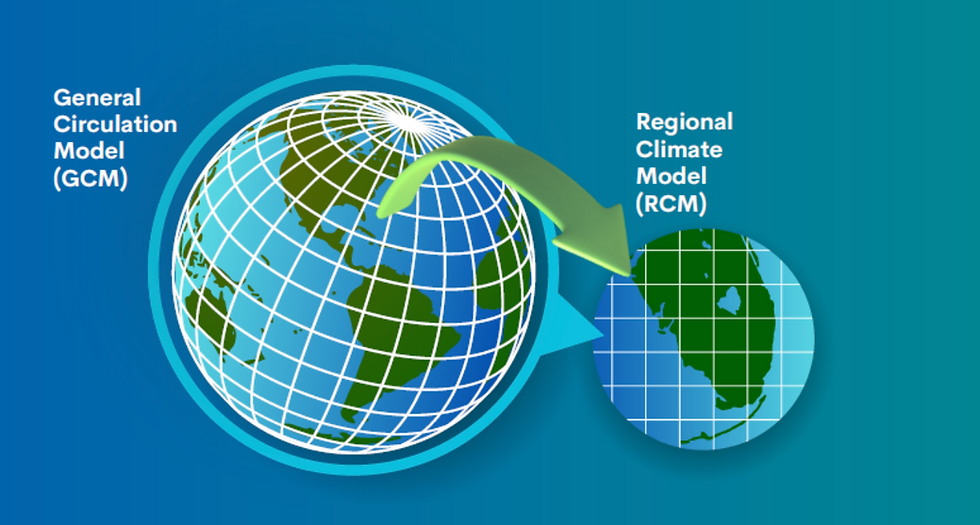
Climate change is reshaping weather patterns worldwide, and communities increasingly depend on high-resolution climate projections to plan for floods, droughts, and other climate-driven risks. But there’s a challenge: global climate models, also called general circulation models, are often too coarse to show what’s happening at a local level.
Dr. Gareth Lagerwall, The Everglades Foundation’s Water Resources Engineer, co-authored a review article that dives into how machine learning (ML) is transforming “climate downscaling”—the process of translating broad climate model outputs (GCMs) into the fine-grained, regional climate models (RCM), needed for local decision making.
The article explores more than a decade of progress in climate downscaling, from early statistical techniques to state-of-the-art machine learning (ML) approaches such as convolutional neural networks (CNNs), generative adversarial networks (GANs), diffusion models, and transformers.
How can improvements in Machine Learning (ML) help us to better understand changing weather patterns?

Over the past decade, machine learning has become an increasingly popular tool in climate science, particularly for downscaling. Dr. Lagerwall and his co-authors reviewed a wide range of existing studies to assess how these techniques are being applied, how consistent the methods are, and where key gaps remain.
One of the most compelling themes that emerged is what the authors call the “performance paradox” —the tendency for existing models with excellent historical skills to falter under non-stationary climate shifts. In other words, many ML models that perform extremely well when tested on historical data lose reliability when applied to possible future climate conditions—conditions that don’t mirror the past.
The review article suggests that scientists should consider tradeoffs across different ML model families depending on the scientific hypothesis they are testing. CNN-based approaches excel at capturing spatial patterns but tend to smooth out extreme events, while generative models can produce high‑intensity events more effectively but come with added complexity and calibration challenges. This tension underscores an urgent scientific question: How do we build, and systemically evaluate, ML systems that remain trustworthy in a rapidly changing climate?
Why Better Climate Modeling Matters for the Everglades

For South Florida and the Everglades, when it rains, how much it rains, and evaporation matters in the annual water budget. Advances in machine‑learning‑based downscaling are increasingly essential for water resources planning in one of the most climate‑sensitive regions in the United States. Water managers must balance restoration goals, flood protection, sea‑level‑rise impacts, and the delicate timing of freshwater flows needed to sustain the Everglades ecosystem.
By integrating state-of-the-art ML models and more robust uncertainty assessments, the approaches highlighted in this review could help improve projections of extreme rainfall, drought onset, and salinity intrusion—factors that directly influence operations across the Everglades ecosystem.
As the review emphasizes, building trust in future projections through standardized testing and hybrid ML methods is a crucial next step, and for South Florida, this progress could translate into more beneficial and resilient decision‑making for both people and the ecosystem.
Want to learn more?
You’re in the right place. For more than 30 years, The Everglades Foundation has been the premier organization fighting to restore and protect the precious Everglades ecosystem through science, advocacy, and education.
Join the movement to restore and protect the global treasure that is America’s Everglades. Sign up to learn more. Follow us on Facebook, Instagram, LinkedIn, YouTube, and X (formerly Twitter). Give a gift of any amount you can to support our mission at EvergladesFoundation.org/Donate.


Comments