

Reinforcing Lake Okeechobee's Herbert Hoover Dike
- Apr 1
- 3 min read
Updated: Apr 6
April x, 2026

Imagine living next to a lake the size of Rhode Island – with water stacked precariously behind a century-old wall of dirt. For decades, that was the reality for communities surrounding Lake Okeechobee.
What Is the Herbert Hoover Dike Rehabilitation Project?
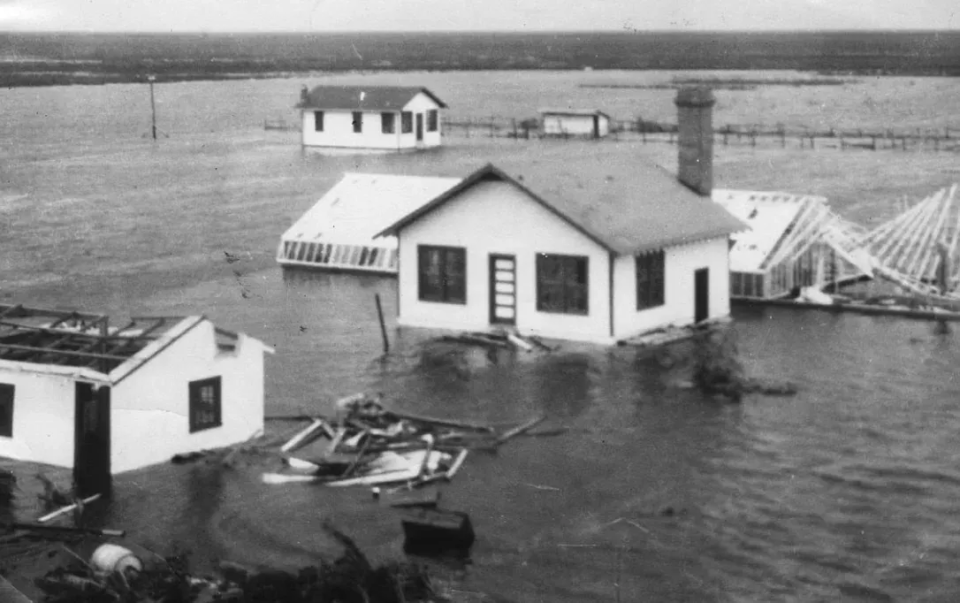
The Herbert Hoover Dike Rehabilitation Project strengthened and modernized Lake Okeechobee’s 143-mile dike – one of the nation’s critical flood protection structures overseen by the U.S. Army Corps of Engineers. Originally built nearly a century ago to protect nearby agricultural communities from devastating floods, the dike had developed structural vulnerabilities like seepage and internal erosion over time, increasing the risk of failure and catastrophic flooding.
To address these risks, the Corps undertook a monumental project to reinforce the dike with 56 miles of concrete seepage barriers and replace or remove water control structures. With a federal investment of over $1.5 billion, the rehabilitation was completed ahead of schedule, significantly improving public safety and our ability to manage the lake in a way that is more compatible with the needs of the environment and our tourism-based economy.
How Did the Herbert Hoover Dike Impact Coastal Communities and the Everglades Watershed?
Concerns about the Herbert Hoover Dike intensified after 2005 when Hurricane Katrina brought attention to flood protection systems in the United States. In response, the U.S. Army Corps of Engineers reevaluated dam safety nationwide and identified the Herbert Hoover Dike as one of the highest-risk structures in the country.
In response to this determination water managers adopted a new operational plan in 2008 called the Lake Okeechobee Regulation Schedule (LORS08). LORS08 required keeping Lake Okeechobee at lower water levels, particularly during the wet season, to reduce risk of failure of this aging Dike.

This often forced large volumes of water to be sent to both the east and west coast, which had negative impacts on coastal estuaries that are critical for ecosystems and economic industries. Meanwhile, this shunting of water to the coast reduced the available water to send south, through the Everglades as was its historic destination. Ultimately, both ecosystems suffered.
What Are the Benefits of the Herbert Hoover Dike Rehabilitation Project?
Completing the rehabilitation didn’t just make communities safer – it created flexibility in water management options. With the dike now reinforced, water managers can operate Lake Okeechobee under a new plan: the Lake Okeechobee System Operating Manual (LOSOM).

Reducing Harmful Discharges and Algae Blooms: In 2024, LOSOM officially replaced LORS08, allowing managers to safely hold more water in the lake when conditions allow. This reduces harmful, high-volume discharges to the east and west coasts and provides more opportunities to move water south toward the Everglades.
Supporting Everglades Restoration: For the first time, lake operations are aligned with the goals of the Comprehensive Everglades Restoration Plan (CERP), reducing discharges, supporting water quality, and improving the timing and distribution of water across the system.
These operational changes will work together with infrastructure like the EAA Reservoir to help restore the flow of water south to the Everglades ecosystem and reduce harmful discharges to Florida's east and west coasts.

This shift supports both water quantity management and water quality goals, particularly efforts to reduce phosphorus before water enters the Everglades.
With the Herbert Hoover Dike Rehabilitation Project complete, we have yet another example of the importance of both modern infrastructure and smart operations working together for successful Everglades restoration.
Watch the Episode
[Video Embed]
Want to learn more?
You’re in the right place. For more than 30 years, The Everglades Foundation has been the premier organization fighting to restore and protect the precious Everglades ecosystem through science, advocacy, and education.
Join the movement to restore and protect the global treasure that is America’s Everglades. Sign up to learn more. Follow us on Facebook, Instagram, LinkedIn, YouTube, and X (formerly Twitter). Give a gift of any amount you can to support our mission at EvergladesFoundation.org/Donate.


Comments