

Tracking Sharks, Advancing Everglades Science: Meet ForEverglades Fellow Julia Saltzman
Updated: 4 hours ago
August 19, 2026

What can sharks teach us about the health of South Florida's coastal ecosystems?
That's one of the questions University of Miami Ph.D. student and 2026 Patrick P. Lee Foundation ForEverglades Fellow Julia Saltzman is working to answer.
Julia is part of The Everglades Foundation's ForEverglades Research Enhancement Grant Program, which since 2008 has awarded more than $2.2 million to 111 master's and doctoral students across 20 universities conducting research that advances our understanding of the Everglades ecosystem.
We recently joined Julia and the University of Miami Shark Research and Conservation Program in the field to document their shark-tagging research and learn more about the science behind it. Watch the videos below and read our interview with Julia to learn more about her research, the connection between sharks and Everglades restoration, and her experience as a ForEverglades Fellow.
Can you tell us about your research and some of the discoveries you've made so far?
My research focuses on shark movement ecology, particularly how juvenile and subadult sharks use Biscayne Bay and Florida Bay. I am interested in understanding where young sharks spend their time, which habitats they rely on, how long they remain in these coastal systems, and how connected these areas are as sharks grow.
I use satellite and acoustic telemetry to track individual sharks after release. Satellite tags provide location information when a shark comes close enough to the surface, while acoustic tags transmit unique signals that are detected by underwater receivers throughout the bays. Together, these technologies allow us to reconstruct shark movements over time and identify areas where individuals spend extended periods or repeatedly return.
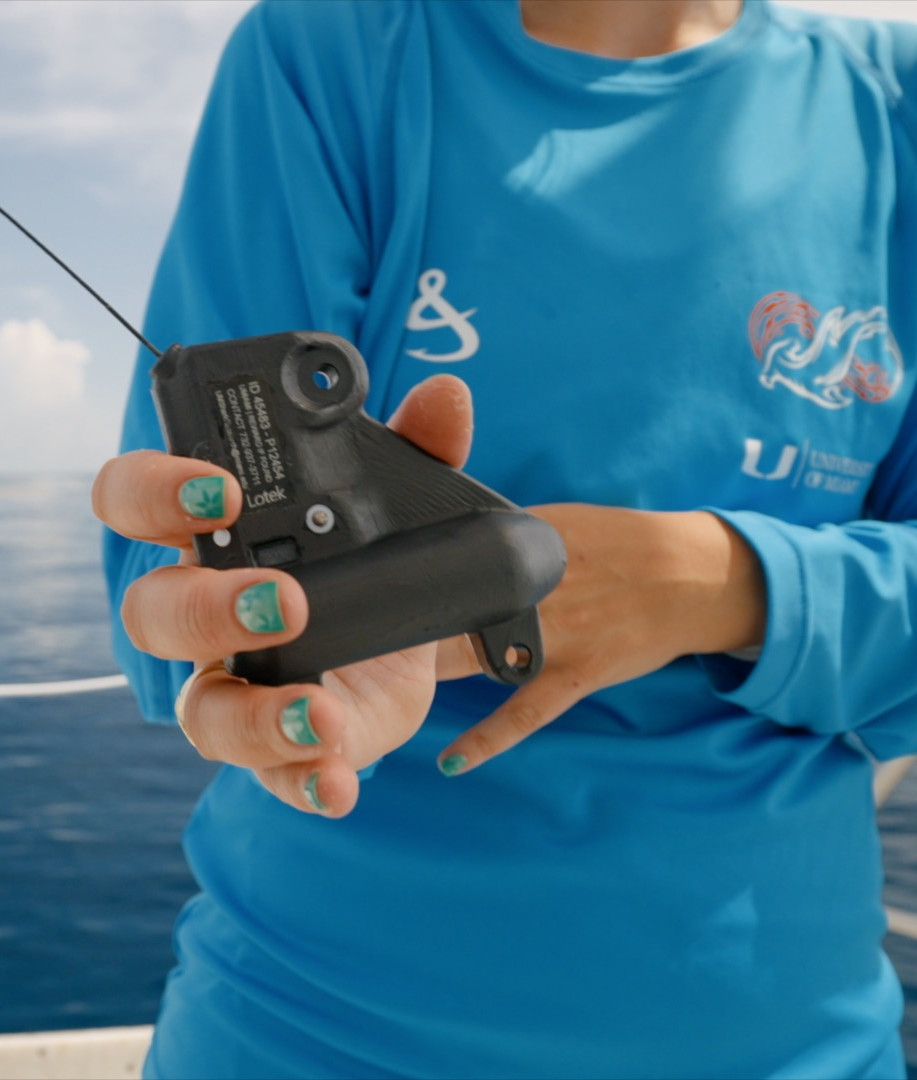
By comparing movement and habitat use between Biscayne Bay and Florida Bay, I can examine how sharks use two connected but very different parts of the Greater Everglades ecosystem. Our work is already showing repeated use of Biscayne Bay by juvenile and “teenage” tiger sharks, suggesting that it may serve as an important secondary nursery habitat. Expanding this research into Florida Bay will help us understand movement and connectivity across the broader ecosystem and identify habitats that may be especially important for young sharks as they grow.
How does your research help us understand the impacts of Everglades restoration on South Florida's coastal ecosystems?
Biscayne Bay and Florida Bay are both part of the Greater Everglades ecosystem, which makes them really interesting places to study shark movement and nursery habitat use.
Everglades restoration is changing the timing, quantity, and distribution of freshwater reaching South Florida's coastal environments. Those changes can influence salinity, water quality, seagrass communities, prey availability, and other environmental conditions that may ultimately affect how sharks use these habitats.

By tracking juvenile and subadult sharks in both Biscayne Bay and Florida Bay, I can examine how they respond to these different environmental conditions and whether they move between areas as they grow. Florida Bay provides an especially interesting comparison because it is directly connected to Everglades National Park and major restoration efforts, while Biscayne Bay is much more heavily influenced by urban development and human activity.
Essentially, understanding where young sharks spend their time and what habitats they depend on can help us better understand how restoration and environmental change may influence predators at the top of these coastal food webs.
What does it mean to you to be selected as a Patrick P. Lee Foundation ForEverglades Fellow?
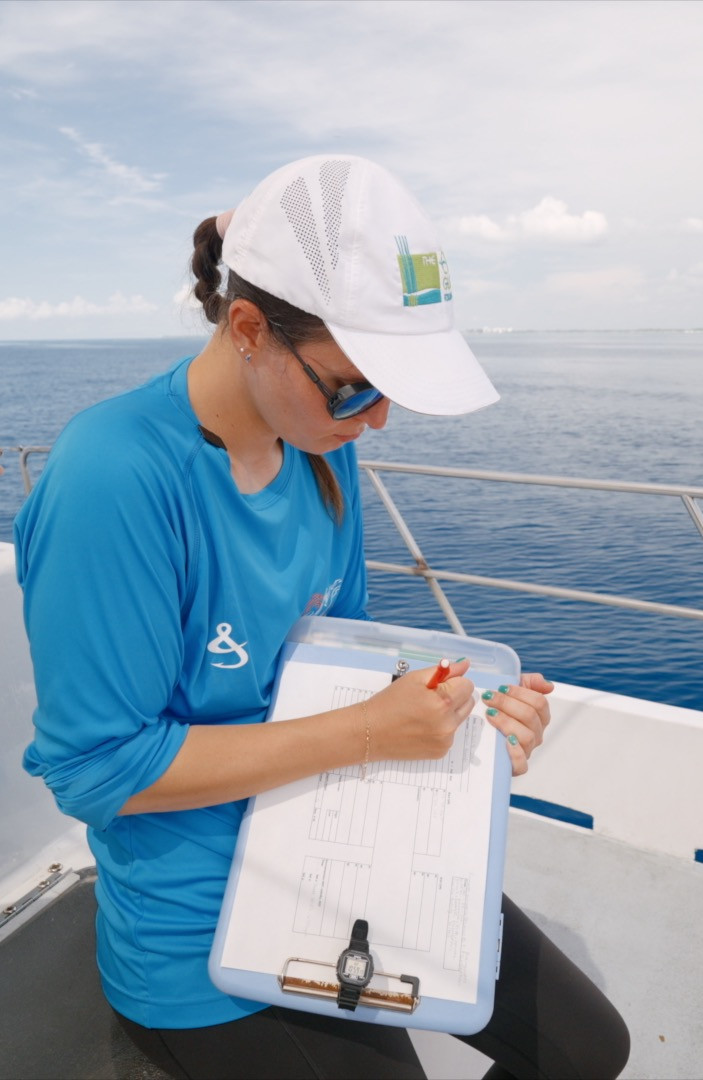
Being selected as a Patrick P. Lee Foundation ForEverglades Fellow has been incredibly meaningful because it felt like an investment not only in my research, but in me as a scientist and in the kind of conservation work I hope to continue throughout my career.
Funding can be especially difficult to secure for applied conservation research, particularly because many traditional funding opportunities are structured around basic science. The ForEverglades Fellowship is especially meaningful because it supports research that advances our understanding of these ecosystems while also having direct relevance to conservation, restoration, and management.
The fellowship gave me the support and flexibility to pursue questions that connect shark ecology with the broader Everglades system, but it has also given me something that extends well beyond the funding itself: a lasting relationship with The Everglades Foundation and the broader Everglades research and conservation community.
Through the fellowship, I have been able to connect with scientists, conservationists, policymakers, and others working toward the shared goal of restoring and protecting this ecosystem.
What makes the University of Miami Shark Research and Conservation Program unique?
The University of Miami's Shark Research and Conservation Program studies shark ecology, movement, behavior, and conservation throughout South Florida and the Caribbean.
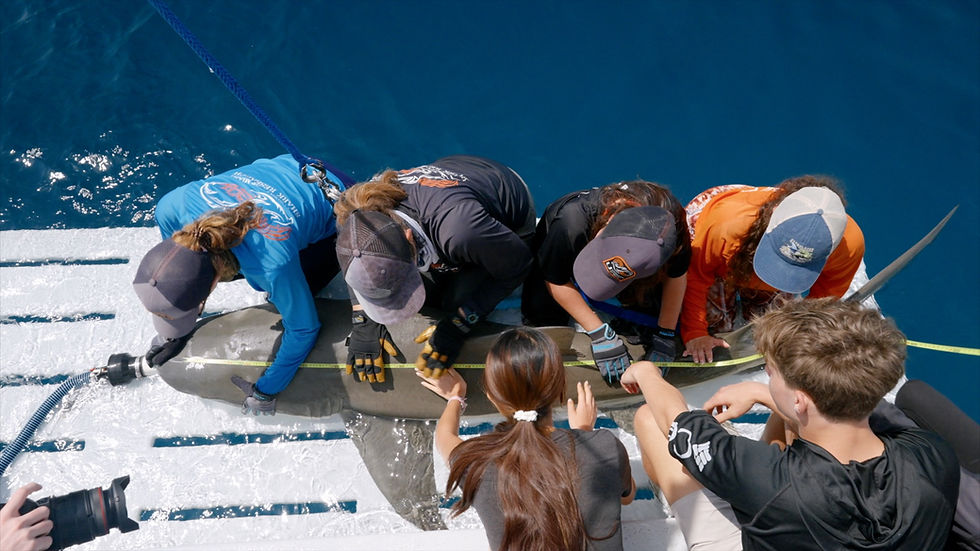
Our field research allows us to collect biological information from sharks while also deploying technologies such as satellite and acoustic tags. These tags are especially important for my research because they allow us to follow individual sharks after they are released and understand how they move through places like Biscayne Bay and Florida Bay over much longer time periods.
One of the strengths of the program is that we are able to combine long-term field surveys with movement data and other environmental information. That gives us a much more complete picture of how sharks are using South Florida's coastal ecosystems and allows us to ask questions about nursery habitat, connectivity, environmental change, and conservation.
What advice would you give to young people who dream of studying sharks or pursuing a career in marine science?
I would tell them to stay curious and to remember that studying sharks is about much more than sharks themselves. To understand why a shark moves somewhere, you also have to understand the habitat, prey, water conditions, human activity, and larger ecosystem around it. That is one of the things I enjoy most about movement ecology—tracking an animal gives you a way to ask much bigger ecological questions.
I would also encourage students to learn as many different skills as they can and to take every opportunity that is given to them, even if it is not exactly what they originally imagined themselves doing. Shark science is much more than being on a boat and tagging sharks. In reality, a large part of the work happens behind the scenes through data analysis, coding, statistics, telemetry, spatial analysis, writing, outreach, policy, and many other disciplines.
Say yes to opportunities to get involved, ask questions, meet people, and try new things. Some experiences may seem small at the time, but they can lead to new skills, mentors, collaborations, and opportunities you never expected. You do not need to know exactly what you want to specialize in right away. Find the questions that genuinely interest you, stay curious, and be willing to learn. There are many different paths into shark science, and some of the most interesting work happens when you bring several of those experiences and approaches together.
Listen to Julia's August 20th interview with Keys Talk Radio:
Want to learn more?
You’re in the right place. For more than 30 years, The Everglades Foundation has been the premier organization fighting to restore and protect the precious Everglades ecosystem through science, advocacy, and education.
Join the movement to restore and protect the global treasure that is America’s Everglades. Sign up to learn more. Follow us on Facebook, Instagram, LinkedIn, YouTube, and X (formerly Twitter). Give a gift of any amount you can to support our mission at EvergladesFoundation.org/Donate.


Comments