

Across South Florida, One Message: A Thriving Everglades Means a Thriving Economy
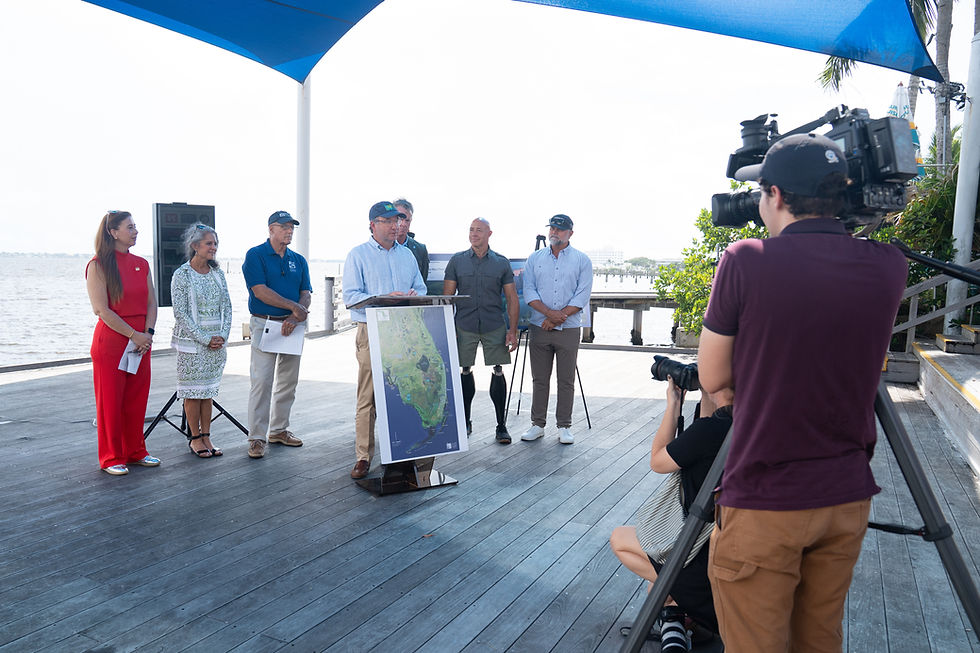
August, 3, 2026 - This year, The Everglades Foundation took the economic case for the Everglades on the road. Across South Florida, the Foundation convened a series of economic roundtables that brought together more than 100 business owners, chamber leaders, elected officials, and community stakeholders to put a value on what a healthy Everglades delivers.
Led by The Everglades Foundation's CEO Eric Eikenberg, Chief Economist Dr. Paul Hindsley, and Chief Science Officer Dr. Steve Davis, the roundtables were designed to share findings from the Foundation’s landmark report, Thriving Everglades, Thriving Economy: Nature's Value in the Everglades — and just as importantly, to listen. The conversations spanned the region, from Naples and Sanibel on the Southwest coast, to Stuart and Palm Beach on the Treasure Coast, and to Broward, Miami and Islamorada.
Why the Business Community?
The 16 counties that make up the Everglades watershed are home to Florida's fastest-growing economies. Real estate, tourism, agriculture, fishing, and small businesses all depend, directly or indirectly, on the health of this single ecosystem. As Dr. Hindsley reminded participants at the Collier County roundtable, “Everglades restoration is an important part of our economic resiliency in our region.”
That message resonates because the numbers are staggering. The economic study, conducted by The Everglades Foundation with Earth Economics, estimates that the Greater Everglades delivers at least $31 billion in annual value and roughly $1.01 trillion over the next 50 years in ecosystem services. Those services range from real estate enhancement and outdoor recreation to flood protection, drinking water, and carbon storage.
What We Heard
Across every region, stakeholders were able to tie the health of the Everglades to the issues that shape their bottom lines and their communities:
· Real estate values that rise and fall with water quality
· Tourism and recreation economies vulnerable to algal blooms and red tide
· Drinking water security for the millions of Floridians who depend on the system
· Coastal resilience against storms, flooding, and sea-level rise
The conversations included understanding the economic scars of past water crises. Harmful algal blooms in 2013 and 2018 alone caused more than $3 billion in losses to real estate and tourism in just two Florida counties, a memory still fresh in coastal communities.
Regional Nuance, Shared Stakes
While the takeaway was consistent everywhere — a healthy Everglades is the foundation that holds South Florida's economy together. But each region brought its own perspective. On the Southwest coast, from Naples to Fort Myers, conversations centered on the devastating ripple effects of Lake Okeechobee discharges, red tide, and lost tourism revenue — including an estimated $2.7 billion in tourism losses in 2018. On the Treasure Coast, Stuart stakeholders connected restoration to property values, marine industries, and the long memory of blue-green algae crises. Along the Atlantic coast, from Jupiter and West Palm Beach to Miami, the focus was drinking water security, flood mitigation, and the urgent need to connect inland restoration to coastal outcomes. In Islamorada and the Keys, the conversation turned to Florida Bay, where the health of world-class fisheries and the tourism economy depend on clean freshwater flowing south.
Restoration Is Working — and It's Worth It

These economic stakes are exactly why the progress now underway matters so much. Everglades restoration isn't a distant promise; it's happening today, and the benefits are already reaching the communities that hosted the roundtables.
Reservoirs and stormwater treatment areas east and west of Lake Okeechobee are now built and operational, improving conditions for the estuaries on both coasts. In Miami-Dade, the elevated bridges along Tamiami Trail and an underground seepage wall are restoring the natural southward flow of water into Everglades National Park and Florida Bay while protecting nearby communities and safeguarding the drinking water drawn from the Biscayne Aquifer. Anchoring it all is the EAA Reservoir, the "crown jewel" of restoration south of Lake Okeechobee. Now accelerated five years ahead of schedule to 2029, the Reservoir will cut harmful coastal discharges by up to 55 percent, and send clean freshwater south to the Everglades, Florida Bay, and the Keys.
Together, these projects prove that the economic value quantified in the report is not theoretical; it is being protected and restored, one project at a time.
Building a Business Coalition for Restoration

The roundtables were more than information sessions; they were the beginning of a broader coalition. They build on the work of the Foundation's Everglades Chamber Council, which has grown to represent 12 chambers statewide since its founding in 2022, uniting business voices behind moving Everglades restoration forward.
What Comes Next
The conversation doesn't end here. The insights gathered will shape how to communicate restoration's value to policymakers, engage chambers and business leaders. The key is to ensure the Everglades resonates with every Floridian.
A thriving Everglades is a thriving Florida and the business community is ready to join the mission to restore and protect America's Everglades.
If you are interested in having a Chamber of Commerce join the Everglades Chamber Council please contact Director of Engagement Keely Weyker at: kweyker@evergladesfoundation.org
Want to learn more?
You’re in the right place. For more than 30 years, The Everglades Foundation has been the premier organization fighting to restore and protect the precious Everglades ecosystem through science, advocacy, and education.
Join the movement to restore and protect the global treasure that is America’s Everglades. Sign up to learn more. Follow us on Facebook, Instagram, LinkedIn, YouTube, and X (formerly Twitter). Give a gift of any amount you can to support our mission at EvergladesFoundation.org/Donate.


Comments